Postal Stamps, Labels, Envelopes, Postcards, and whatever else that can give us an excellent opportunity to examine the conflict through contemporary items in the participant's daily lives. I am not a partisan of either side of the conflict, but just a curious neophyte.

Thursday, February 14, 2019

An Interim Cover

The Second Spanish Republic was declared on April 14, 1931 however the first stamps issued by the new republic didn’t begin to be issued until May 23rd, which left about a five-week period when the previous regime’s stamps were utilized.
As I indicated in my previous post I enjoy the Second Republic overprints on the last Alfonso XIII definitive issue, the Vaquer type. In fact, I believe the Vaquer issue is one of the most attractive issued by Spain or elsewhere.
Franked with one 5c. (Edifil #491) and two 50c. (Edifil #498) this registered/certified cover night section postmark dated May 18th falls within the transition period.  The rear is sealed with a Casa De Galvez wax seal.

40c for letter rate to country not part of the Spanish Postal Union
25c for extra 20 grams
40c. for certified mail
for a total 1.05 pesetas

The legendary and very important philatelic businessman Miguel Gálvez sent this cover to Swiss philatelic publisher Zumstein in Bern. There is a cover in Tomo 1 of Edifi’s Red Series on page 295 from the same M. Galvez. During the war he and his wife fled to Belgium to start a branch of their company that lasted until the 1950s.


Saturday, January 26, 2019

A love Affair, or Sorts

I am drawn to the Second Republic's República Española overprinted Alfonso XIII definitive series. They are a good look at the transition from monarchy to Republic played out via stamps. Interesting enough but the covers are pretty reasonable and somewhat plentiful. I will be posting them from time to time.


This registered and certified cover dated 12/3/1931 from oil exporter “Laesa” in Barcelona to Paris is franked with 5 República Española overprinted Alfonso XIII Vaquer definitives.

Two 5c. (Edifil #544), two 15c. (Edifil #596), and one 40c. (Edifil #600). The total franking is 80c. This franking covers the initial rate for business papers up to 250p in value and 50grams of weight (10c.), the 30c. registration fee for value up to 300 gold francs, and 40c. for international medical/samples and/or papers up to 20grams which includes the cost of certification.

The reverse as you can see has 5 wax seals with the impression "Laesa" with a DuPont oval hand stamp.  I assume, safely, of a relationship between the two. Functio laesa is a term used in medicine to refer to a loss of function which I assume improving said function loss is the purpose of Laesa products.

The receiver was the Société Anonyme de Vilbis. This is a limited liability firm that I believe is connected to or with the DeVilbiss Corporation which has its roots beginning in 1888 in Toledo, OH. Dr. Allen DeVilbiss developed a spray atomizer which made spraying medicines to patients throats much easier. Which probably utilized some sort of oil or oils.
Here is an image from an invoice from the war from Laesa (borrowed from Google).

Friday, January 11, 2019

Francisco Ferrer

Yes, I know I haven’t posted in several weeks. I haven’t felt like writing. No Surprise when you spend 8 hours a day in front of a computer screen, of course that doesn’t mean the pick-ups have slowed down. Recently, I thought about how to branch out in an interesting manner since SPCW items are not always easy to find that meet my needs. I am some what fascinated by Alfonso XIII, the last Spanish king, and I was trolling the online auction house that starts with an E and came across a unused post card for the whopping price of $3 free shipping. Sold, so what was the post card that tweaked my interest? Well I could have done some research before I purchased but for $3 it was worth picking up then figuring out what the subject is.

Francisco Ferrer, you may have asked yourself from time to time who was Francisco Ferrer? Probably not, but he was a big thing in the first decade of the 20th century among the radical clique. Wiki tells us a lot about him. He was born on January 10, 1859 on a farm near Barcelona. Though his parents were very dedicated Catholics he became an anti-clerical radical free thinker and rejected his parents religion. He was active in radical actions and supporting the Republican movement, which in 1885 led him to take part in a failed Republican uprising, which forced him in to exile in France for 16 years. He then began to explore anarchism, which led him to open a libertarian school when he returned to Spain in 1901. This school was the Escuela Moderna in Barcelona.
The Escuela Moderna’s curriculum was an alternative to the religious schools, which had a monopoly on education. The school taught new scientific, historical, and sociological content not offered elsewhere. In 1901 when the school opened there were more than 30 students and when the Spanish government closed the school in 1906 there were more than 126. The school charged based on parent’s ability to pay, and the school-rejected rewards and punishments-no grades no exams and students planned their own work and there was no attendance tracked.

I am not going much into his politics but it will suffice to say that he received no break from the policeria and his home was often raided and he was generally hassled.  He was a threat to the government, the church, and the military-the trifecta.

In 1906 there was an assassination attempt on Alfonso XIII but the actual waanabee assassin was an anarchist that had worked at the school. As a result he was in prison until 1907 when international pressure forced his release.  Fast forward to August 1909 when he was rearrested for “participation” in the “Tragic Week “ uprising Barcelona.

Unfortunately, Francisco would be executed on October 13, 1909, as a result supposedly his last words before the firing squad killed him was "Aim well, my friends. You are not responsible. I am innocent. Long live the Modern School!"

OK, now we are getting there-but it wouldn’t make any sense to explain the postcard without the background.

The postcard is brown and portrays a Spanish priest and a Spanish officer marching over two bodies one of which is Liberty. At the top is says “The Masters of Spain Sabre et Goupillon Dios, Patria, y Rey (Early Spanglish). I translated Goupillon and it means bottlebrush in French-perhaps a reference to the mustache.

At the bottom is says “Liberty Under Foot in Spain by Church and State” with various military and church items.
At the bottom it has “Published by Francisco Ferrer Ass’n 242 5th Ave, New York” (Google Earth gives us the address as it is now) and the reverse is standard and has no relevant text.

So I searched for this association. The association was founded in NY in 1910 as a reaction to his execution the year before. The association was founded by anarchists and was headquartered at the Ferrer Center and it also contained a school. In 1914 the school, or as then known as the Ferrer Colony, moved to Stelton, NJ.

Saturday, November 10, 2018

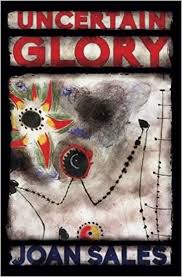
Film Review- Uncertain Glory (Incerta glòria) (2017)

Uncertain Glory (Incerta glòria)
Initial release: March 14, 2017
Director: Agustí Villaronga
Based on Joan Sales Catalan language novel of the same name from September 1956.
There are those movies that are about a place, time, and/or an event. Then there are those movies that can be set in any place, time, and/or during an event. I think Uncertain Glory does an excellent job of walking the line with a foot in each-a beautiful film set in 1937 in the Aragon Theater. The move is in Catalan not Spanish! I have a soft spot for the Catalans and Aragonese as my mother’s family is Sicilian and her maiden name is Italianized Spanish and my DNA says I am over 3% Iberian.
I digress; the move is set in a small village where when the film opens the first scenes are the execution of the local minor nobility by radical left-wingers. Fast forward to 1937 when a Republican officer Lluís and his best friend Soleràs whom are from Barcelona are stationed to man the lines that run by the village.
 Lluís meets the “widow” of the executed nobleman and falls for her, but not her for him.
However, the widow is a tough woman with a tragic and traumatic history and she is more interested in self-preservation than a fling. We find out the Lluís has a “wife” and son in Barcelona.
Lluís, his wife, and Soleràs are all urban anarchists and Lluís, and his wife isn’t actually married. I assume anarchists don’t marry in general?
So now we get to the meat of the matter- Lluís doesn’t know if he is in love with his wife, but we do learn that Soleràs is. This creates tension as Lluís’ commanding officer invites the officer’s wives for Christmas. This sets Soleràs of the deep end and he defects to some Nationalist Moroccan soldiers. Soleràs is the friend you have that is a little off kilter-free spirit that you love but at the same time dislike. Here he is in Barcelona with some fantastic propaganda posters.
I am not going to give you a spoiler this time, but the widow manipulates Lluís’ in doing something terrible in order to safe his son. At the close of the movie we see that there begins shelling and shooting in what had been a very chill place.

I really thought this was a well done film-beautiful, engaging, and an excellent look at “petty” politics in small villages, and the lengths that people will go for self-preservation, and the complexities of love and friendships. I loved the uniforms but when we saw Nationalist troops there uniforms looked so much like the Republicans except they wore a steel helmet. Here is Soleràs after he defected.

Postal history- Lluís in one scene sits at a desk trying to write a letter to his wife but he isn’t able to. On his desk is a stack of letters with postage (can’t see what the frankings are). In another scene Soleràs burns letters where you can see clearly that one envelope has a 2 cts a Catalan Ajut All Mutilats de Guerra Conselleria de Treble and a Republican  10 cent regular issue.

Sunday, October 28, 2018

Servicio Social de la Mujer Rosa Lama Galolte

This is a post-war proof of service card for the Feminine Section of the Servicio Social, which was founded July 12, 1934. The founder of the Falange party José Antonio Primo de Rivera placed his sister Pilar as the head of the organization. Rosa Lama Galolte received professional training through the organization. Reason I thought it would be an interesting addition to the collection is the 1 Peseta Servicio Social revenue stamp. Though this falls out of the war period I believe it can be included because of the subject and the franking.
The above, I believe are for the same person as the record-I.D numbers are the same. This is work history-franked with Servicio Social 50 cent and 2 Pesetas revenues as well as 50 cent José Antonio Primo de Rivera propaganda label-revenue 50 cent stamp.

F.E.T. y de las J.O.N.S

DELEGACION PROVINCIAL
DE
SECCION FEMINA

Que Rosa Lama Galolte natural de Sevilla j de 20 anos de edad, ha cumplido el deber nacional del servicio social, establecido por S.E. el jefe del según Decreto   de 7 de octobre de 1937.

Para que conste lo firmo en Sevilla a 27 de Febrero de 1943

F.E.T. y de las J.O.N.S

PROVINCIAL DELEGATION
FROM
FEMALE SECTION

That Rosa Lama Galolte, a native of Seville, 20 years old, has fulfilled the national duty of social service, established by S.E. the head of the Decree of 7 October 1937.

For the record, I sign it in Seville on February 27, 1943

The Falange Española Tradicionalista y de las Juntas de Ofensiva Nacional Sindicalista (FET y de las JONS) 

Traditionalist Spanish Phalanx and of the Councils of the National Syndicalist Offensive.

This was only legal political party in Francoist Spain. The Carlist Party and the Falange Española de las JONS merged in 1937.  With the rebirth of democracy following the death of Franco in 1977 the party was dissolved 

Isabella the Catholic and Santa Teresa de Jesus were the models of behavior for the members. The Women’s Section had complete control of how women were expected to behave and act as good Christians, and good wives and patriots. During the war these women provided support to the Nationalist troops as well as those families of party members being held as prisoners. 

Following the war the Women’s Section was reorganized and Social Assistance became their responsibility, as was the previous Winter Help campaign.
By 1941, 282,224 women received mandatory training through the Social Services. Women were required, whether members or not, to receive training as professionals through the Feminine Section, while others were required through the Social Service organization, and worked in hospitals, schools, orphanages etc.

Sunday, October 21, 2018

It is Over When it is Over

When did the war end? This seems like it would be an easy answer to what may  appear a simple question. Alas, it is not. On April 1st, 1937 Generalissimo Franco announced from Burgos via broadcast “Today, after having disarmed and captured the Red Army, the Nationalist troops have secured their final military objective. The war is ended. Burgos, April 1, 1939. Year of Victory.”
Done deal right? Not so quick, some scholars believe the war didn’t end until the death of Franco at the age of 82 on November 20th, 1975.  Or did it end when Franco issued an amnesty in 1969 to those on the Republican side for their "actions" after the 1936 rising? Or did it end when on October 30, 1975 Franco gave full power to Juan Carlos? Or was it on November 22, 1975 when the Cortes Generales proclaimed Juan Carlos King of Spain. Or was it when the Spanish people voted on December 6, 1978 with 91.81% of the voters voting for a new constitution?

It is more and more apparent to me the war is not not over as the battle of memory is still being waged-here we may see the losing side win the war of memory. As the battle over whom owns the history of the war, the Republican side or the Nationalist continues. Unfortunately I believe this war as it is currently being fought is rife with the possibility of not healing old wounds but instead opening them as one side as voraciously attempted to wipe the memory of the other side out as it attempts to paint absolute evil or purity to the two sides.
Only the future will tell when and if the war has ended as there are calls from the U.N and Amnesty International to prosecute those who committed crimes during the Francoist period. I am not opposed to such a thing but these two organizations have a poor track record of holding left-wing, communist country's feet to the flame-so their motives are always in doubt.

I am not really sure-I will go with the April 1, 1939 day as the day of the end of the war. Because technically, with some armed resistance, it ended hostilities between the Nationalists and the Republicans. I think the scope of the blog should really cover the Second Republic and the 1940s. Otherwise, accepting the 1975 date as the end doesn’t I believe reflect the actual end and would force me to expand the collection. Alas, no!
This brings me to the subject of this posting-the Mexico-Spain reestablishment of diplomatic relations on March 28, 1977! Yep 1977! When Franco declared the end of hostilities on April 1, 1939 Mexico broke off diplomatic relations with Spain. It never recognized the rebellion and the Nationalists. In fact, not many people know about the significant support provided the Republic by Mexico whom after the U.S.S.R supplied the most money and material to the Republic. I admire the Mexican government for saying heck no.
Mexico issued three airmail stamps (SC #C537-539) in 1977 to commemorate the reestablishment of diplomatic relations with Spain.  Simple in their design with one having portraits of Mexican President De La Mora and King Juan Carlos, another with the two countries and another with their official seals.
Kind of blah-however, Mexico would make up for the commemoration of the 25th anniversary of this reestablishment of relations in 2002.
The aid provided by Mexico included; $2,000,000 in aid and material assistance, 20,000 Rifles, 28,000,000 cartridges, and Aircraft.

More importantly, Mexico provided a safe place for Republican Spanish refugees to migrate to once the war ended. I actually know someone, a friend, whose grandfather came to Mexico from Spain as a refugee.

Monday, September 3, 2018

Help the Basque Children

As I posted earlier there was a fairly extensive aid network. Another of these organizations was the Basque Children's Committee (BCS) which was a part of the National Joint Committee for Spanish Relief (NJCSR).
The BCS took the lead in taking care of the initial wave of child refugees from the Basque lands. A little less than 4, 000 (3,886) children arrived aboard the steamship Habana (above) in Southamptom Docks off May 23, 1937.  These children were under the care of the BCS which were tasked with finding accommodations for them and the teachers (96), assistants (118), and Priests (16). These refuges were  housed in a camp in North Stoneham, expecting only 2,000 people the camp was to say the least overcrowded, which as one would expect became very unhealthy very quickly.
It was decided to place the children and their chaperones in various "Colonies" across Great Britain including one at 4 Great Smith Street, London SW1. Currently an office of the Department of Education.
By September of 1937 all of the children had been placed in these colonies. Other organizations pitched in and over a third of the children where supported by the Salvation Army and the Catholic Church.  When the war began to wind down the children that could be were repatriated to those areas that where it was safe for them to return. When the Second World War broke out in September of 1939 there were still about 400 refugee children in the U.K and by 1948 only 280 Basque children remained.

To help support the refugees the BCS issued a total of three fundraising stamps beginning in 1938. We were able to add two of them-these are the "Help the Basque Children" stamps. In total there were three stamps, two showing a young girl, and one a young boy. The one with the boy were issued first and have a different address on it-I will post more on this if I am able to grab a copy. The second stamps featuring the young girl were issued in green and red and was issued in December of 1938.

According to the Basque Children of '37 Association these were issued with a leaflet (see below):

“1,000 Basque children refugees are still enjoying the quiet peace and security that Great Britain has afforded them.They want to go on living here till the Spanish War is over and they can once more be united with their mothers and fathers, nearly all of whom are at present either political prisoners or refugees themselves. But it costs money to keep them and so they are asking you to help by buying some of these stamps to stick on your correspondence. A sheet of 24 stamps costs only 6d. It is very little, but if 100,000 people join together to help in this way, just think of what it will mean.”

The association indicates that in the Spanish Relief bulletin #15 of the National Joint Committee for Spanish Relief :"The Basque Children’s Stamp continues to enjoy a steady sale. To date it has brought us in a profit of more than a hundred pounds.”
Let us take a look at the stamps themselves. both are identical except for the colors. The feature a front profile of a young unnamed girl (the boy on the stamp is identified). The legend says "HELP THE BASQUE CHILDREN" DONATIONS TO 4 Great Smith St. London, SW1 and are Perf 11 1/4.


Had to be an Easier Way

I have had this cover for some time and I when I picked it up it was because I was intrigued by the ingenuity of the sender's placemen...